
 Blog
BlogThe best Cabo sunset cruise isn’t a single experience—it’s the one that matches your group, your budget, and your definition of a perfect evening on the water. With dozens of operators running daily departures from the marina, the difference between a memorable night and a crowded disappointment comes down to knowing what separates premium charters from tourist traps.
Key Takeaways
- Private yacht charters ($800–$2,500) offer far superior value for groups of 6+ compared to per-person dinner cruises at $120–$180 each
- November through May delivers the most reliable golden-hour conditions; June through October brings cheaper rates but 30% higher cancellation risk from summer storms
- The corridor between Land’s End and Santa Maria Bay provides the calmest water and best Arch photo angles—avoid operators routing toward the Pacific side in afternoon winds
- BYOB policies vary dramatically: some all-inclusive cruises limit you to house wine and domestic beer, while private charters often allow premium spirits with no corkage
- Sunset timing shifts 90 minutes seasonally; December departures leave at 4:30 PM, July departures at 7:00 PM—verify actual departure time, not just “sunset cruise” labeling
- Marina pickup location determines your entire experience: Muelle 1–4 offers direct Arch access; outer marina docks add 20+ minutes of slow-speed no-wake zones
Table of Contents
- What Makes the Best Cabo Sunset Cruise: Defining Quality
- Private Yacht vs. Group Dinner Cruise: Honest Comparison
- Seasonal Timing: When to Book for Optimal Conditions
- Pricing Breakdown: What’s Actually Included
- Vessel Types and Sizing for Your Group
- Food and Beverage: Beyond the Marketing Photos
- Safety, Licensing, and Red Flags to Avoid
- Booking Logistics and Marina Navigation
- Photography and the Arch: Maximizing Your Moment
- Special Occasions: Proposals, Anniversaries, and Groups
- Sustainable and Responsible Tourism Options
- Final Recommendations: Matching Experience to Traveler
- Frequently Asked Questions
What Makes the Best Cabo Sunset Cruise: Defining Quality
The difference between a sunset cruise you’ll remember for years and one you’ll want to forget often comes down to the vessel itself. Boats built or refit after 2018 generally feature modern air-conditioned cabins, updated sound systems, and restrooms that don’t reek of diesel. More critically, reputable operators carry documented safety inspections from SEMARNAT (Mexico’s environmental agency) and the Mexican Coast Guard—ask to see these certificates before you board. Older boats may cost $20-40 less per person, but I’ve seen too many mechanical failures strand groups mid-trip, turning sunset magic into a towing ordeal.
Crew Density and Maritime Credentials
Service quality correlates directly with crew-to-guest ratios. Shared cruises packing 80 passengers with eight staff (1:10) feel like floating bus tours—you’ll wait twenty minutes for a mediocre margarita. Premium shared experiences maintain 1:8 or better. Private charters worth their $800-$2,500 price range for two-hour outings typically run 1:4 or tighter. This matters for personalized photo help, drink timing, and safety response.
Captain credentials reveal even more. Basic tourism permits require minimal maritime training. The best private charters employ licensed mariners who completed Mexico’s título náutico program or hold international certifications—meaning they can actually read changing wind patterns around the Arch and won’t panic when a Pacific swell hits.
Route execution separates photographers from passengers with blurry phone shots. Quality operators position at Land’s End approximately twenty minutes before sunset, holding position for Arch silhouette opportunities while light remains directional. They then execute a slow drift toward Chileno Bay as sky colors intensify—avoiding the amateur mistake of racing back to marina while oranges and magentas peak. This positioning requires local knowledge of seasonal current patterns; December-Fbruary brings cooler, crisper visibility, while August-September can produce dramatic storm-cloud backdrops with hazy horizons.
Food sourcing reveals whether you’re paying for experience or theater. Budget operators often load pre-plated meals from dockside restaurants like The Office or Mango Deck, served lukewarm two hours later. Premium experiences cook proteins fresh aboard—sea bass, yellowfin, or dorado sourced from La Paz suppliers who deliver morning-of. Ask specifically: “Is the seafood cooked on the boat?” Vague answers mean restaurant contracting. The $40-60 per-person upgrade for genuine galley preparation translates to fish that hasn’t sat in warming trays, plus the aroma of actual cooking that complements rather than competes with salt air.
Private Yacht vs. Group Dinner Cruise: Honest Comparison
Most travelers booking a Cabo sunset cruise face the same fork in the road: join a group dinner cruise with dozens of strangers, or splurge on private charter. The decision hinges less on budget alone and more on what you actually value during those two to three hours on the water.
Group dinner cruises run $120–$180 per person through operators like Cabo Adventures and SunRider, carrying 40 to 150 guests on multi-deck catamarans. You get a fixed menu—typically grilled chicken or fish, rice, and an open bar of domestic beer and well drinks—plus assigned seating that locks you into one zone for the duration. Mobility is limited once underway; you cannot wander to the bow for an unobstructed photo without navigating a crowd. For couples watching their spending or solo travelers who want guaranteed social energy, this works. The experience is standardized, the crew professional, and the Arch of Cabo San Lucas still looks spectacular from any deck. Just expect buffet-line pacing and music volume set for the group, not your conversation.
Private sailing yachts occupy a different register entirely. A 38- to 50-foot monohull or catamaran runs roughly $600–$1,200 for 2–6 guests, often with a captain and mate who encourage hands-on participation—hoisting sails, taking the wheel, or simply sprawling on foredeck netting with no one else’s elbow in frame. Operators like Cabo Sailing and Pez Gato keep fleets in the marina. These vessels heel gently in afternoon wind, so they suit travelers who romanticize actual sailing over floating cocktail parties. The quiet matters: proposals and anniversary trips frequently book here because uninterrupted conversation is possible. You can linger at Land’s End for twenty extra minutes if the light turns gold, or skip the crowded anchorage entirely.
When a Motor Yacht Makes Sense
Motor yacht charters start around $1,500 for intimate 40-footers and climb to $4,000 for 60-foot vessels accommodating 8–12 guests. The premium buys speed, stability, and space. Twin engines plane across chop that would rock a sailboat, a genuine consideration for guests prone to seasickness—Cabo’s afternoon winds can kick up 3–4 foot swells outside the bay. The real advantage is catering flexibility. Unlike group cruises with commissary kitchens, motor yachts contract with Cabo institutions: Flora Farms in San José del Cabo or Los Tamarindos in the nearby farmland can prepare multi-course meals served on proper tableware. One outfit we spoke with charges a $200 delivery fee for Flora Farms’ wood-fired dishes, which guests universally deemed worth it.
| Factor | Group Dinner Cruise | Private Sailing Yacht | Private Motor Yacht |
|---|---|---|---|
| Typical price | $120–$180/person | $600–$1,200 total (2–6 guests) | $1,500–$4,000 total (6–12 guests) |
| Per-person cost at 8 guests | $120–$180 | $100–$200 | $190–$500 |
| Menu control | Fixed buffet | BYO or simple catering | Full restaurant catering |
| Seasickness risk | Moderate (large catamarans stable) | Higher (heeling, slower) | Lowest (speed, stability) |
| Best for | Budget-conscious couples, social travelers | Proposals, sailing enthusiasts | Groups, food-focused celebrations |
The break-even math surprises many travelers. At eight guests, a private motor yacht at $2,400 total matches the per-person cost of premium group cruises at $150–$180 each—while eliminating stranger dynamics, buffet lines, and the race for railing space at golden hour. Private sailing yachts hit price parity even earlier, around four guests. The calculus shifts if your group includes elderly parents, young children, or anyone who needs a bathroom every thirty minutes; motor yacht facilities simply outperform sailboat heads in comfort and privacy.
Our practical advice: book group cruises for Tuesday or Wednesday departures when load factors drop and crews have bandwidth to engage. For private charters, confirm whether quoted rates include fuel, dock fees, and crew gratuity—typically 15–20% on top—before comparing apples to apples. And if you’re splitting a motor yacht among friends, assign one person to coordinate catering logistics two weeks ahead; the best farm-to-table options require lead time that marina snack bars do not.
Seasonal Timing: When to Book for Optimal Conditions
Timing your sunset cruise in Cabo San Lucas is less about chasing perfect weather and more about matching conditions to your priorities—whales, value, or uninterrupted golden hour. The Baja Peninsula’s microclimate delivers remarkably consistent outcomes, but the differences between December and August are substantial enough to reshape your experience.
Peak season runs December through April, when northerly winds subside and the Pacific swell flattens into glass. Operators charge premiums of 40–60% above baseline rates during this window, with private yacht charters starting around $1,200–$1,800 for a 42-foot vessel versus $750–$950 in off-peak months. The trade-off is measurable: Cabo averages 340+ days of clear horizons annually, and winter delivers the highest concentration. Humpback whales migrate through the corridor between December and mid-April, with January and February offering near-guaranteed sightings within 500 meters of the Arch. Water stability matters for photography—winter swells rarely exceed one meter, making champagne toasts on the bow actually feasible without spillage.
The Shoulder Month Advantage
May and November represent the most underappreciated booking windows. Whale activity extends into early May with mothers and calves lingering before the northward migration; November sees the first arrivals returning south. Sunset times stretch to 6:45–7:15 PM, compared to 5:30 PM in December, which prevents the rushed dinner service that plagues winter departures. Pricing reflects pre-summer or post-hurricane-season hesitation—expect 15–25% discounts off peak rates with identical vessel availability. Water temperatures in May hit 24–26°C, warm enough for comfortable snorkeling without the summer’s stifling humidity.
June through October brings 30–40% discounts and empty moorings at Land’s End, but the trade-offs are specific and real. The North American Monsoon drives afternoon thunderstorm development between 4:00 and 7:00 PM, with August and September seeing 8–12 days of measurable precipitation. Reputable operators—SunRider, Cabo Adventures, and private charter outfits like Blue Sky Cabo—maintain flexible rebooking policies during hurricane season (officially June 1–November 30), though “flexible” varies: some offer 24-hour advance rescheduling, others only credit vouchers. The National Hurricane Center issues outlooks worth monitoring if booking July–September.
- Avoid: January 1–15 and U.S. holiday weekends (Memorial Day, July 4, Labor Day). The marina transforms into a parking lot with 45+ minute boarding delays.
- Book ahead: 60+ days for peak season weekends, or accept 6:00 PM departures that miss true golden hour by 20–30 minutes.
- Request: 5:30 PM boarding for December–February sailings; 6:00 PM for March–October.
Pricing Breakdown: What’s Actually Included
The $99 sunset cruise rate you’ll spot on booking platforms is almost never the final bill. That advertised price covers the boat, basic domestic open bar, and dinner—but marina fees, gratuity, and drink upgrades are peeled off separately, and most travelers only discover this at checkout or, worse, at the dock. The Baja California Sur tourism board has flagged this practice repeatedly: expect to add $25–$35 per person for the federally mandated marina access fee, $15–$20 for crew tips (already split among 3–5 staff), and another $40–$60 if you want premium spirits or wine instead of well liquor and soda. Your actual evening runs $180–$220 per person, which is competitive with Cancún or Puerto Vallarta but bears no resemblance to that initial headline number.
Private Charter Hidden Costs
Yacht and sailboat quotes for bachelor parties or anniversary trips carry their own surprises. Fuel surcharges kick in on bookings exceeding four hours—common for sunset cruises that linger for stargazing or add a snorkel stop at Playa Santa María. Ask specifically whether the quoted rate includes diesel; operators often bill $50–$150 extra for extended cruising. Bringing your own anniversary champagne? Corkage fees run $25–$50 per bottle on most 40-foot+ vessels, and some contracts prohibit outside alcohol entirely. Overtime rates bite hardest: the agreed four-hour window closes, and suddenly you’re paying $150–$300 for each additional hour while your group finishes photos at the Arch. Get itemization in writing before the deposit clears.
- Photography licensing: Crew members with iPhones shoot complimentary, but professional drone footage runs $400–$800. Verify the operator’s DGAC drone permit—unlicensed flights near El Arco have triggered federal fines exceeding $10,000 pesos, and your captain won’t risk their license for a guest’s uncertified pilot.
- Weather cancellation gaps: Standard “operator cancellation only” policies leave you exposed. Cabo’s marine layer rolls in fast October through January; afternoon forecasts showing 15-knot winds often mean chopped swells and gray skies by 5:00 PM. Third-party weather insurance ($15–$30 per booking) covers passenger-initiated changes when conditions degrade but aren’t severe enough to trigger the boat’s own cancellation threshold.
- Dinner quality tiers: The $99 rate typically covers chicken or fish buffet lines; steak or lobster upgrades push per-person costs toward $140 before fees even accumulate.
Your safest approach: request a line-item quote via email, cross-reference against the official Los Cabos tourism site fee schedules, and budget 40–50% above the advertised base rate. The couples who report satisfaction aren’t the ones who found the cheapest listing—they’re the ones who knew the real number before packing their bags.
Vessel Types and Sizing for Your Group
Catamarans dominate the Cabo sunset fleet for good reason. At 40 to 65 feet, these twin-hull vessels maximize usable deck space—often 1,500+ square feet of open trampolines, forward nets, and shaded cockpit areas. That stability matters: zero heel angle means grandparents can move freely with toddlers, and photographers can set up tripods without compensating for roll. The trade-off is speed. Most Cabo catamarans cruise at 6–8 knots, so operators depart from the marina by 4:30 PM in winter (sunset ~5:45 PM) or 5:30 PM in summer to reach Land’s End with adequate time for the arch transit and anchoring. Popular models here include the Lagoon 450 and Leopard 44, both configured with open bars forward where guests sprawl for the golden-hour money shot.
Monohull sailboats—typically 35 to 50 feet Beneteaus, J/Boats, or local-built variants—appeal to guests who want to feel the boat work. The heel angle (often 15–20 degrees upwind) and spray over the rail deliver an authentic sailing experience that catamarans sanitize away. Upwind performance matters in Cabo: afternoon winds frequently blow 12–18 knots from the northwest, and a monohull can beat back to the marina faster if conditions turn. But that same motion excludes travelers with mobility limitations, recent surgeries, or serious seasickness susceptibility. Wet decks and narrow sidedecks require sure footing. These vessels rarely carry more than 6–8 guests comfortably, and bathroom facilities range from marine heads below to nonexistent.
When Climate Control Becomes Non-Negotiable
Luxury motor yachts and converted sportfish—50 to 100+ feet—solve problems the sailing fleet cannot. Full-enclosure salons with AC, proper galleys turning out hot meals, and multiple heads with showers transform a 3.5-hour sunset experience from endurance to indulgence. This matters for multigenerational families with infants needing bottle warming, or older guests who chill quickly after 6 PM when Pacific breezes drop air temperatures 10–15 degrees. Sportfish conversions (common here: 60-foot Bertrams and Viking sport-cruisers repurposed from tournament fishing) offer flybridge seating 15 feet above waterline—superior sightlines over other vessels clustered at the arch.
Capacity math in Cabo requires skepticism. Mexican maritime regulations and operator marketing diverge sharply. A vessel marketed as “12 passengers” typically provides:
- Comfortable seated dining for 8–9 adults with elbow room and camera access
- Tolerable cocktail standing for 10–12 with shoulder-to-shoulder positioning
- Actual legal maximum (including crew) often 15–18, which operators rarely hit because service quality collapses
For photography-focused groups, divide stated capacity by 1.3 to estimate usable space. A “16-passenger” catamaran realistically accommodates 12 guests with room to circulate. Private charters priced at $800–$1,400/hour for motor yachts or $600–$900/hour for catamarans become economical when split across actual comfortable capacity rather than advertised maximums. The Secretaría de Marina (Mexican Navy) conducts spot inspections, but enforcement varies—reputable operators like Cabo Adventures and Sun Rider voluntarily underload by 20% to maintain TripAdvisor ratings.
Food and Beverage: Beyond the Marketing Photos
The gap between marketing imagery and actual plate quality is where most Cabo sunset cruises disappoint. Group operators advertise “gourmet dining” that translates to buffet lines of lukewarm chicken fajitas and pre-mixed margaritas from concentrate. For travelers with dietary restrictions, this becomes a genuine problem: mass-market boats typically offer a single vegetarian pasta option and little else. Celiac guests, those with shellfish allergies, or anyone following strict protocols will find crew members untrained on cross-contamination and kitchens too small to segregate preparation.
Private charters solve this through pre-trip coordination, but only if you push for specifics. Established operators like Cabo Adventures, Pisces Sportfishing, and boutique yacht services maintain relationships with caterers who can execute keto, paleo, or allergen-free menus—expect to pay $45–$75 per person above base charter rates for this service. The key is requesting documentation: reputable caterers provide ingredient lists and preparation timelines. Skip any operator who responds vaguely (“we can handle allergies”) without follow-up questions about severity.
What Actually Pours From the Bar
Open-bar claims require scrutiny. Budget-tier group cruises—typically $65–$95 per person—stock Cuervo Gold, domestic Corona or Pacifico, and powdered drink mixes. Premium private charters running $800–$1,500 per hour stock Herradura Reposado, Clase Azul, and increasingly, wines from Valle de Guadalupe. The Baja wine region, roughly 90 minutes north of Cabo, produces surprisingly competent Tempranillo and Chenin Blanc; quality charters source from Ruta del Vino consortium producers. Ask specifically: “What tequila brands?” Vague answers mean well-bar quality.
The “fresh catch” narrative deserves particular skepticism. Mexican maritime law prohibits passenger vessels from fishing; SEMARNAT regulations restrict commercial fishing to licensed boats with specific permits. That mahi-mahi on your plate was caught by a separate commercial operation and transferred dockside. Some high-end charters partner with specific fishing cooperatives for traceability, but verify rather than assume. If sustainability matters, request documentation of sourcing—legitimate operators provide it.
| Cruise Tier | Typical Bar Stock | Dining Format | Dietary Accommodation |
|---|---|---|---|
| Budget Group ($65–$95) | Cuervo Gold, domestic beer, mixers | Buffet, limited seating | Vegetarian only; no guarantees |
| Mid-Range Private ($400–$700/hr) | Herradura, Don Julio, regional wines | Plated or family-style | 48-hour notice for allergies |
| Premium Yacht ($800–$1,500/hr) | Clase Azul, Valle de Guadalupe wines, craft cocktails | Custom catering | Full protocol coordination with caterer |
Timing errors ruin otherwise excellent experiences. Boats departing at 5:30 PM for a 7:15 PM sunset often serve dinner in darkness—guests miss the visual entirely. This is especially common December through February when sunset arrives earlier. Request itineraries that prioritize viewing: dinner service should begin 45 minutes before sunset or conclude with dessert during twilight. Operators structuring meals around the golden hour rather than convenience distinguish themselves; those who won’t adjust departure times for your booking date are revealing their operational rigidity.
Safety, Licensing, and Red Flags to Avoid
Most travelers don’t realize that Cabo’s marina and beachfront teem with unlicensed operators until something goes wrong. Mexico’s Secretaría de Turismo (SECTUR) maintains a registry of authorized tour providers, yet many sunset cruise bookings happen through hotel lobby desks or beach solicitors working on commission—often for boats that bypass registration entirely. Before paying any deposit, request the operator’s SECTUR registration number and verify it independently. For vessels serving food or alcohol, current COFEPRIS health certifications are equally non-negotiable; these should be displayed prominently or produced on request, not met with excuses about “renewal processing.”
Life Jacket Protocols That Separate Professionals from Pretenders
Regulations mandate life jackets for all passengers under 12, regardless of swimming confidence. The distinction matters in execution: reputable operators size children before boarding, checking fits against weight brackets and securing straps properly while still docked. Red-flag operators often hand out ill-fitting adult vests only after passengers request them, or worse, store jackets in locked compartments “accessible in emergencies.” Insist on seeing your child’s assigned jacket during check-in—Cabo’s afternoon chop can turn calm waters rough within 20 minutes, and panicked children in loose vests create compound emergencies.
Weather policies reveal operational priorities. The National Hurricane Center tracks conditions, but local decisions fall to captains. Be wary of any operator advertising “we go rain or shine” without explicit wind and swell thresholds. Industry-standard cancellation triggers include sustained winds above 15 knots or swells exceeding 4 feet—conditions that transform a romantic sunset into seasickness misery or genuine danger. Quality operators reschedule without penalty; budget outfits often pressure departures with partial refunds or credit vouchers expiring before your vacation ends.
- Confirm pickup dock location by written message 24+ hours ahead—vague “we’ll text you tomorrow” responses suggest last-minute shuttle arrangements to unpermitted anchorages outside marina jurisdiction
- Verify that quoted prices include all marina fees; remote beach departures often indicate operators avoiding $80-$150 daily dock charges and harbor master inspections
- Request captain credentials directly: legitimate operators employ licensed captains with SEMARNAT certifications for protected-area navigation
- Photograph vessel registration numbers visible on hulls—unmarked or obscured numbers correlate with uninsured operations
Peak season (December through March) amplifies these risks as demand outstrips legitimate supply. The difference between a $65 and $120 sunset cruise often isn’t luxury—it’s regulatory compliance, insurance coverage, and crew training that only manifests when conditions deteriorate.
Booking Logistics and Marina Navigation
Marina location determines how much sunset you actually see. Muelle 1 through Muelle 4—the inner docks closest to the harbor mouth—put you at Land’s End in roughly 10 minutes of cruising. Puerto Paraiso and the outer marina slips, while newer and often prettier for boarding photos, sit behind a mandatory no-wake zone that stretches nearly to the harbor entrance. That slow-speed transit burns 20 to 40 minutes each way, which on a December sunset (around 5:15 PM) can mean watching the sun disappear while you’re still idling past the cruise ship terminal.
Getting There and Parking Realities
Most established operators include hotel pickup along the tourist corridor stretching from San José del Cabo to Cabo San Lucas proper. Expect a 30- to 45-minute pickup window rather than a precise time—vans loop through multiple resorts, and traffic on Carretera Transpeninsular bottlenecks unpredictably near Costco and the marina entrance. If you self-drive, validated parking runs $10 to $15 for the evening at Puerto Paraiso or the marina’s official lots. Add a 15-minute buffer: dock numbering is inconsistent, and “Muelle 2” signs point to different finger piers depending on which marina office installed them. Crews rarely answer phones within 30 minutes of departure as they’re staging glassware and briefing catering staff.
Payment structures reveal which operators actually live in Cabo versus offshore booking platforms. Mexican-owned vessels typically require 50 percent deposit through secure processors—Stripe, PayPal, or established regional systems like Conekta. Never accept wire transfer requests; legitimate operators stopped asking years ago after fraud disputes spiked. Balance is due 48 hours before departure, timed so your credit card’s chargeback window remains open if the vessel develops mechanical issues. This matters: the marine environment here is brutal on electronics, and last-minute generator failures or autopilot malfunctions are common enough that consumer protection is worth preserving.
- Same-day bookings for private yachts occasionally surface at 20 to 30 percent below standard rates, typically through WhatsApp messages from captains whose afternoon charter canceled
- The tradeoff is total loss of itinerary control—you take the boat as configured, often with substitute crews unfamiliar with your group’s dynamics
- Maintenance shortcuts compound on these deals: engines pushed past service intervals, expired fire extinguishers, galley refrigeration that barely holds safe temperatures
- Reputable operators blacklist captains who habitually dump distressed inventory this way, but the practice persists among vessels operating on thin margins
For couples prioritizing the experience over budget, the premium paid for established operators with fixed Muelle 1-4 slips returns value in actual sunset duration and predictable crew quality. Bachelor and bachelorette groups tempted by last-minute discounts should weigh whether a compromised vessel suits a celebration where equipment failure would derail the evening’s momentum.
Photography and the Arch: Maximizing Your Moment
The Arch of Cabo San Lucas photographs differently than most people expect. That iconic granite formation, where the Sea of Cortez meets the Pacific, faces west—meaning the best light hits its face roughly 10 to 15 minutes before the official sunset time listed on your weather app. By the moment the sun actually dips below the horizon, the rock has already fallen into shadow and the golden-orange glow has migrated to the water behind it. Experienced charter captains know this, but many still anchor where it’s convenient for service rather than where the angles work.
Positioning and Practical Tactics
Request port-side seating (the left side of the vessel) when heading toward the Pacific side of the arch. This positioning puts you between the sun and the rock face during that critical pre-sunset window. The difference in your images is substantial: warm sidelight reveals texture in the granite that flat evening exposure flattens into silhouette. For phone photographers, download PhotoPills or Sun Surveyor before your trip. These apps predict sunset azimuth by date and GPS coordinates, letting you request specific vessel positioning from your captain with precision most guests don’t bother to learn. The apps cost $10–$15—far less than what you’ll spend recovering from a disappointing photo session.
Drone photography at the Arch carries genuine legal risk. The entire formation sits within the Cabo San Lucas Bay marine reserve, where unauthorized aerial capture triggers fines of 50,000 to 200,000 Mexican pesos (roughly $2,500–$10,000 USD). Mexican federal environmental regulations apply regardless of your drone registration status elsewhere. If aerial footage matters to your group, confirm explicitly with your operator that they hold permits—and request documentation. Reputable charter companies offering drone packages include this paperwork in pre-trip correspondence; vague assurances should prompt you to book elsewhere.
For professional photography packages, the deliverables matter more than the equipment. Insist on raw image delivery within 72 hours of your cruise. Some operators optimize files exclusively for social media compression, delivering 1080p JPEGs that degrade further with any editing. A proper package includes full-resolution files with editing latitude. Expect to pay $400–$800 for a dedicated photographer on a private charter, or $150–$300 as an add-on to shared sunset cruises. The investment separates images you’ll actually print from ones that stay buried in camera rolls.
Special Occasions: Proposals, Anniversaries, and Groups
Proposals on the water require choreography that most operators cannot execute on short notice. The captains who handle these regularly—Cabo Adventures, Sun Rider, and a handful of private yacht brokers—need two to three weeks to arrange custom “Will You Marry Me?” signage on the foredeck, coordinate with a photographer hidden on a chase boat or positioned at a pre-arranged GPS coordinate near Land’s End, and time champagne service for the moment the sun touches the horizon. Same-day requests typically max out at rose petal scattering and a complimentary bottle; the photography and signage simply cannot be sourced. December through March bookings are especially constrained—Valentine’s Day and spring break compress availability—so late January confirmations for early February dates often fail. Expect to pay a $300–$500 coordination fee atop the cruise fare for full proposal packages, with photography add-ons running $400–$800 for a half-hour session.
Bachelor, Bachelorette, and Multi-Generational Groups
Bachelor and bachelorette groups routinely mismatch with operators because “sunset cruise” means radically different things. Cabo Escape and similar party-focused charters run 40-foot catamarans with 800-watt sound systems, open bars, and explicit encouragement of high-energy behavior—these departures often overlap with spring break peak season (mid-March to early April) and book solid six weeks out. Conversely, operators like Tropicana and several private sailboat captains prohibit amplified music after 7 PM and will terminate charters for excessive intoxication. Specify your preference explicitly when booking; the industry does not standardize this, and a quiet group on a party boat or a raucous group on a family-oriented vessel ruins the evening for everyone. Group rates typically require eight or more passengers and offer 10–15% discounts off standard per-person pricing, though private charters (starting around $1,200 for a four-hour sailing catamaran) often prove more economical for groups of ten or more.
Multi-generational family bookings demand vessel-specific questions that generic booking platforms rarely surface. Shaded seating is not universal—many smaller sailboats have canvas coverage only over the cockpit, leaving bow seating fully exposed. Accessible bathrooms require beam width above 12 feet; ask directly rather than assuming “yacht” implies comfort. Boarding is the friction point: ladder entry from a rolling dock challenges anyone with limited mobility, while swim-step platforms at water level permit easier transfer. Operators with ADA-compliant vessels include Cabo San Lucas Tours and several Los Cabos Yacht Club members; these typically cost 20–30% above standard rates but eliminate the risk of a grandparent remaining dockside.
Corporate and incentive groups face a compliance issue that U.S.-based planners often miss. Mexican tax regulations require factura electrónica—formal electronic invoicing with RFC (tax ID) registration—for business expense deductions. The informal cash or PayPal arrangements common in tourist bookings fail audit requirements. Reputable operators issue proper facturas within 72 hours; confirm this capability before deposit, as retroactive correction is bureaucratically difficult. The Servicio de Administración Tributaria (SAT) governs these requirements, and U.S. corporations have faced IRS scrutiny for undocumented international entertainment expenses.
Sustainable and Responsible Tourism Options
Eco-certification in Cabo’s marine tourism sector requires scrutiny. Blue Flag marina status—held by Puerto Los Cabos and previously by select operations near the Cabo San Lucas marina—denotes compliance with water quality, environmental management, and education standards. EarthCheck certification, more common among resort-affiliated charter fleets, demands third-party audit of carbon, water, and waste metrics. A leaf logo or “eco-friendly” banner without these credentials often signals greenwashing. Verify through Blue Flag’s global directory or request operator-specific EarthCheck reports before booking.
Wildlife Protocols That Actually Protect Marine Life
Gray and humpback whales migrate through Cabo’s waters December through April, with peak sightings in January and February. Responsible operators train crews to cut engines to idle when whales surface within 100 meters—roughly the length of a football field—and maintain that buffer unless the animal approaches voluntarily. Sea lion colonies at Land’s End warrant similar distance. Charging toward pods, loud music during encounters, or guarantees of “swimming with whales” indicate operators prioritizing Instagram moments over animal welfare. The Mexican environmental agency SEMARNAT enforces these distances, but enforcement at sea remains spotty; your charter choice directly shapes pressure on wildlife.
Single-use plastic policies reveal operational priorities clearly. Premium sailboat charters including Cabo Adventures’ sustainable fleet and select private yachts through companies like Cabo Sailing have shifted to refillable glass water stations, bamboo serviceware, and aluminum containers for mixed drinks. Operations still distributing bottled water and plastic cups—common among budget snorkel combos priced under $90 per person—typically cut corners on crew training and maintenance as well. Ask specifically: “Do you serve drinks in glass or provide refillable water?” The answer predicts broader environmental commitment.
- Local employment matters beyond ethics. Charters crewed primarily by Cabo San Lucas and San José del Cabo residents—identifiable by Spanish-accented English and regional knowledge of hidden coves like Santa Maria Bay’s eastern inlet—deliver navigation insights mainland-imported crews rarely match. These operators typically source fish from Punta Lobos fishermen and route tips to family-run shoreline restaurants.
- Wages stay in Baja California Sur’s economy rather than repatriating to mainland states. Crew composition is rarely advertised; direct inquiry (“Where do your captains live?”) yields honest answers from quality operators.
- Community benefit extends to post-cruise recommendations. Locally rooted crews direct guests to sustainable operators for subsequent activities—sea turtle hatchery visits at Hilton Los Cabos, certified by SEMARNAT, or responsible sport fishing with CaboORT‘s tag-and-release programs.
Final Recommendations: Matching Experience to Traveler
The best Cabo sunset cruise isn’t the one with the slickest marketing—it’s the one that actually fits your traveling party. Here’s how to match experience to traveler without overspending or booking the wrong vessel.
Budget-conscious couples should target Tuesday through Thursday departures in the shoulder months of November or May. Midweek slots typically run 15–30% below Friday–Sunday pricing, and the weather remains stable enough that you’re not sacrificing sunset quality. Prioritize operators who’ve completed recent vessel refits—Cabo Adventures and similar established outfits publish maintenance records—over the absolute lowest price. A $75-per-person group catamaran with new rigging and updated galley beats a $55 cruise on a boat with worn cushions and sluggish engines. Book 10–14 days ahead for these midweek windows; they fill fast with repeat visitors who know the pricing pattern.
Celebration travelers (anniversaries, proposals, milestone birthdays) need a private 40-foot sailing yacht with a 4-hour charter window, not the standard 2.5-hour sunset slot. Depart 90 minutes before official sunset time—roughly 5:15 PM in January, 6:45 PM in June—to secure positioning inside the bay for the full golden hour. Self-cater from Flora Farms in San José del Cabo: their prepared charcuterie and mezcal selections travel well and cost roughly half what onboard catering charges. Build buffer time into the charter—Los Cabos winds often delay re-entry, and a rigid 3-hour booking forces rushed photos in the best light.
Adventure Groups and Families: Different Physics
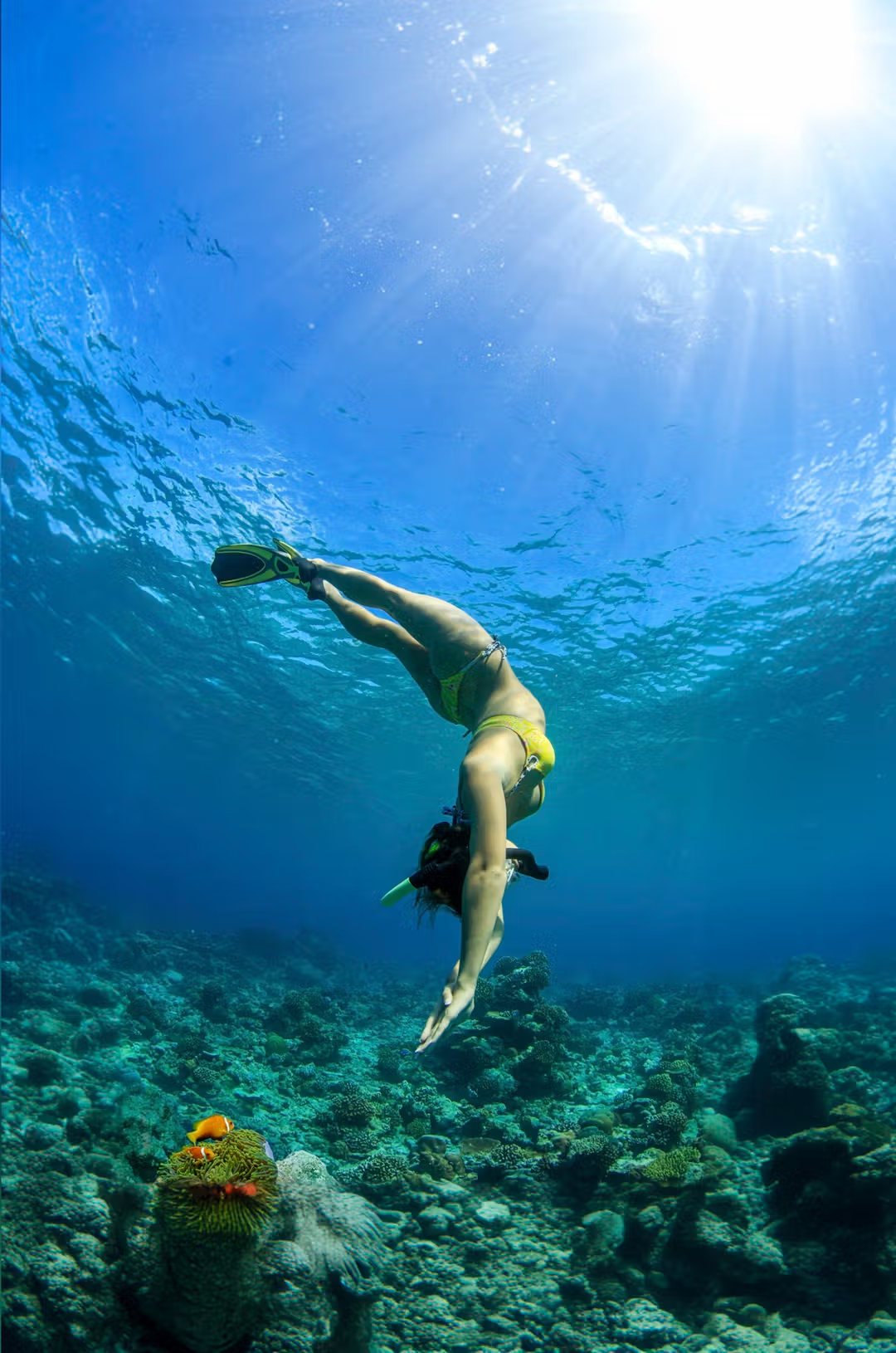
Adventure-oriented groups get better value combining experiences. Book a morning snorkeling session at Santa Maria Bay—45 minutes by boat from the marina, water visibility peaking before 11 AM—then transition to an afternoon yacht charter through operators offering packaged full-day marine pricing. This typically saves $200–400 compared to booking separately and keeps the group on one vessel with consistent crew. Ask explicitly about equipment: quality operators provide prescription mask options and rinse tanks that budget outfits skip.
Families with young children should prioritize motor yachts with enclosed salon spaces over sailing vessels entirely. The Pacific swell builds afternoon chop that unsettles inexperienced kids; a 3-hour maximum duration prevents the fatigue-driven meltdowns that ruin the experience. Critical pre-booking step: confirm child life jacket sizing availability by weight, not just “child size.” Most operators stock adult and generic child vests, but toddlers and small elementary-age kids need specific certifications. Skip sailing charters until children demonstrate comfortable sea legs on shorter harbor tours—there’s no dignified exit from a heeling monohull with a seasick six-year-old.
- Tuesday–Thursday bookings: 15–30% savings over weekends
- Flora Farms self-catering: approximately 50% below onboard yacht catering
- Santa Maria Bay snorkeling + yacht package: $200–400 combined savings
- Child life jacket confirmation: request specific weight ranges (30–50 lbs, 50–90 lbs) during booking
Frequently Asked Questions
What is the best time of year for a sunset cruise in Cabo San Lucas?
The best sunset cruises run from October through May, when the weather is dry and skies are clearest. June through September brings higher humidity and a chance of afternoon rain, but the sunsets are still colorful—just book a 5:30 PM departure to catch the golden hour before clouds roll in.
How long does a typical Cabo sunset cruise last?
Most sunset cruises run 2 to 3 hours, departing around 4:30 or 5:00 PM. The shorter 2-hour trips focus on the sunset itself, while 3-hour charters include a full dinner course and more time to see the Arch and Land’s End from the water.
Are sunset cruises in Cabo San Lucas worth the money?
Yes, if you pick a reputable operator. A standard group sunset dinner cruise costs $80 to $120 per person, which includes open bar, dinner, and views of the Arch—far better value than a crowded beachside restaurant. Private charters run $600 to $1,500 for a group of 10, and the experience is worth skipping the overpriced resort dinners.
What should I wear on a Cabo sunset cruise?
Lightweight layers are key. Temperatures drop 10 to 15 degrees after sunset, so bring a windbreaker or a light sweater even in summer. For footwear, non-slip deck shoes or sandals with grip work best—avoid heels or flip-flops that can slide on wet decks.
Do sunset cruises in Cabo get seasick passengers?
The Sea of Cortez is usually calm in the late afternoon, but the stretch near the Arch can get choppy when wind picks up. If you’re prone to motion sickness, take a half-dose of Dramamine an hour before departure and choose a larger catamaran (40+ feet) instead of a small sailboat—they handle the swell much better.
Can you see whales on a Cabo sunset cruise?
Yes, from December through April, humpback whales are common in the bay during sunset hours. The best vantage points are near the Arch and the Pacific side of Land’s End. Many sunset cruises slow down or pause for whale watching if the captain spots a breaching whale.
What is the difference between a group sunset cruise and a private charter in Cabo?
A group cruise packs 30 to 60 passengers on a catamaran with a set itinerary, shared open bar, and a buffet-style dinner. Private charters give you the whole boat for up to 12 guests, a custom menu, and a dedicated crew—you can pick your own music, stop for photos at the Arch, and skip the loud partiers. For couples or small groups, the private option is worth the extra $200–$400.
Is the food included in Cabo sunset dinner cruises actually good?
On premium cruises, yes. Look for operators that serve grilled fish, steak, or shrimp rather than pre-made buffet trays. The best menus include fresh ceviche, grilled local fish, and Mexican-style sides like esquites and black beans. Avoid cruises that advertise ‘dinner’ but only serve boxed sandwiches or chips.
How far in advance should I book a Cabo sunset cruise?
Book at least 2 weeks ahead during high season (November to April). For holiday weeks like Christmas and New Year’s, reserve a month in advance—most popular cruises sell out. Last-minute bookings in summer are easier, but you’ll still miss the best boats if you wait until the day before.
What is the best spot on the boat for photos during a Cabo sunset cruise?
The bow (front) of the catamaran gives you an unobstructed view of the Arch and the sun as it dips behind the horizon. For silhouette shots, stand at the back near the stern railing, where the golden light backlights the Arch. Avoid the shaded side of the cabin—the sun sets in the west, so the port side (left side facing forward) gets the best light.
Book your Cabo adventure today at cabocity.com.








Comments are closed